Seawall Repair vs. Replacement: How to Tell Which You Need
Show a marine contractor the whole seawall before choosing a repair. A crack in the cap, a leaning panel and a hole in the yard raise different questions. Use this guide to describe what you see, ask what needs inspection, and compare written scopes. The permit data gives background on local work. The condition of your wall determines the recommendation.
The short version
- Photograph cracks, leaning panels, cap gaps and lost fill so the site visit starts with specific observations.
- Ask what a repair would retain and why those parts can support the proposed work.
- Compare written scopes for the same wall, including demolition, access, fill restoration, permits and the final inspection.
The numbers from local permits
| Seawall job | Median permit value | Permits |
|---|---|---|
| Repair (cap, panels, cracks, tiebacks) | $24,000 | 44 |
| Replacement (remove and rebuild) | $29,800 | 160 |
| New wall | $17,000 | 341 |
Values are what contractors declared on public permits (job value at filing). They are local averages for information, not a quote: only a contractor who sees your shoreline can price your job.
Record the warning signs along the whole wall
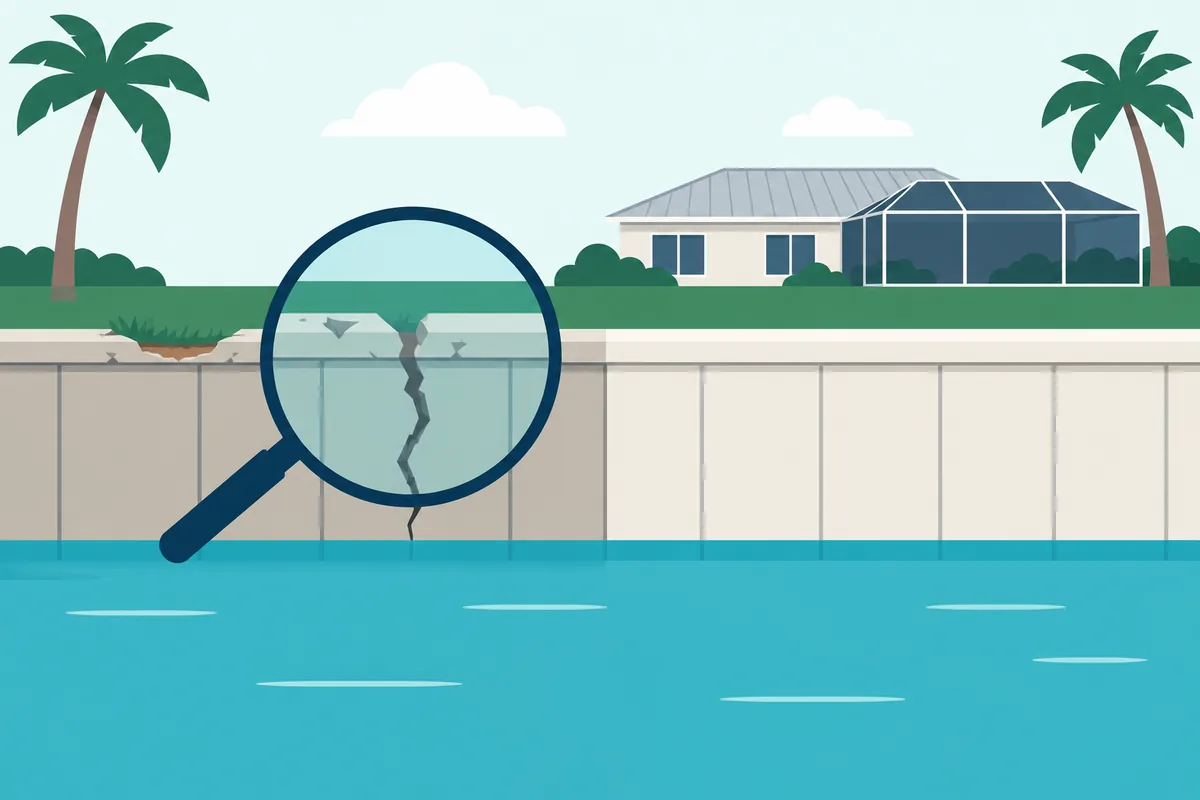
Look along the seawall from a safe place and note cracks, leaning sections, gaps at the cap, rust stains and missing fill behind the wall. Tell the contractor where each sign appears. A photograph helps explain the concern; it does not establish the condition of the hidden parts.
- Show the contractor both the visible damage and the ground behind it.
- Note whether the concern is confined to one spot or appears along the wall.
- Describe changes you have noticed without assigning a cause yourself.
Keep reading
A narrow crack in the cap and a panel that appears to lean should not be bundled into a request to patch the seawall. Point out each separately. Ask the contractor to explain what needs closer inspection before recommending work. Use photographs taken from a safe position and include a wider view so the contractor can see where the concern sits relative to the dock and the rest of the wall.
Walk the yard side only where the ground is safe. Note gaps behind the cap, sunken areas or holes where fill appears to be missing. Keep people away from suspect edges and ask the contractor how the area should be handled during the visit. Avoid filling a hole just to hide it before someone has assessed the wall. You want the recommendation to address the condition you found.
Rust stains belong in the same set of observations as cracks and movement. Ask what the contractor needs to inspect to explain them. Do not let a clean stretch of cap settle the question for the whole shoreline. If you have older photographs, bring them to show what changed. Label what you know from those pictures and what you are recalling from memory.
Define what the proposed repair actually covers
A repair proposal should identify the parts being worked on: the cap, cracks, panels or tiebacks. Ask what stays in place and what the repair is meant to address. The word repair alone does not tell you how much of the wall is included.
- Have the contractor identify each part being repaired or retained.
- Ask how the proposed work addresses the condition found during inspection.
- Read the table above as permit history, not a price for your wall.
Keep reading
For a cap repair, ask which section is included and how the panels below it have been assessed. For crack work, ask what the contractor believes caused the crack and how that finding shapes the scope. If tiebacks are part of the proposal, have the contractor explain their role in the recommended work. These are questions for the site visit, not instructions for a homeowner repair.
Across the tracked Cape Coral and Lee County records, seawall repair permits had a median declared value of $24,043. Seawall replacement permits had a median declared value of $29,850. The table above gives the permit context. These values were declared when the permits were filed. They are not invoices, matching projects or prices for your property, and they do not establish a fixed saving from choosing repair.
The repair records are grouped by job description, not separate prices for caps, cracks, panels and tiebacks. Ask for a written description of the proposed treatment rather than applying a permit median to an individual component. A proposal that lists the parts retained and replaced gives you something concrete to compare. Have the contractor explain any work left outside the repair, including the ground behind the wall.
Ask when replacement addresses more of the problem
Replacement becomes the central question when the concern reaches beyond a local repair. Ask the contractor to explain whether the existing panels, cap and supporting parts can remain. A recommendation should connect the wall's observed condition to the parts proposed for removal and replacement.
- Ask why the retained wall would support a repair or why it would not.
- Have demolition and removal described separately from the new wall work.
- Request an explanation when different contractors recommend different scopes.
Keep reading
Leaning sections, repeated gaps and fill loss are reasons to ask about the wall as a whole. Have the contractor explain whether a limited repair addresses the problem found during inspection. If the recommendation is replacement, ask which findings rule out retaining the existing parts. You should be able to repeat the explanation in plain language before agreeing to a scope that removes the wall.
A replacement proposal needs more detail than new seawall. Ask for the wall length, panel material, cap work, removal of the existing structure and treatment of the ground behind it. Concrete and vinyl are common panel choices. Ask why the proposed material fits the project and have the choice written into the scope. The contractor who sees the shoreline sets the price for that specific work.
If one contractor proposes repair and another proposes replacement, put their descriptions side by side. Ask what each inspected and which existing parts each plans to keep. The difference may be in the scope being offered or the condition each identified. Resolve that difference before comparing totals. A lower number attached to less work does not answer which recommendation addresses your wall's condition.
Give the contractor the storm and repair history
Southwest Florida storms drive seawall rebuilding, while saltwater and boat wakes wear waterfront structures. Tell the contractor what you know about earlier damage and repairs. An older wall needs an assessment of its present condition; its age alone does not supply a repair or replacement plan.
- Bring older photographs, repair paperwork and any permit numbers you have.
- Separate changes after a storm from problems you had already noticed.
- Ask how the current recommendation deals with earlier repaired sections.
Keep reading
Hurricane Ian in 2022 and Helene and Milton in 2024 damaged docks, lifts and seawalls across the region. If you noticed movement or fill loss after those storms, say where and when. Also describe cracks or gaps that were present beforehand. This history gives the contractor questions to follow up during inspection. It does not establish the cause of every mark on the wall.
For a Cape Coral canal lot, identify whether the wall fronts freshwater or saltwater. Mention boat wakes and the dock or lift beside the affected section. Keep the discussion tied to what you can show at the property. Ask how those conditions affect the proposed work, without assuming a material has a fixed service life or that a replacement will prevent all future storm damage.
Old repair paperwork can help show what work was previously described. Compare it with the current wall and ask the contractor about areas that were left in place. If the history is incomplete, say so. You do not need to invent a wall age or guess what a previous owner changed. Ask what inspection or design information is needed to make a recommendation from the condition today.
Use the site visit to test the recommendation
Ask the contractor to connect the visible signs, the condition of the wall and the proposed work. The visit should leave you with a clear description of the problem being addressed. Bring questions about the cap, panels, tiebacks, fill behind the wall and access for removal or construction.
- Ask what has been checked and what still needs further assessment.
- Have the contractor explain access and the effect on nearby dock or lift work.
- Confirm which plans and permitting office apply to the proposed scope.
Keep reading
Start with the warning signs you recorded, then ask the contractor to show how they relate to the proposed scope. Which panels remain? What happens to the cap? How will the work address lost fill? If the answer depends on information not yet available, have that item identified in writing. A clear unanswered question is more useful than a firm recommendation based only on a photograph.
For Cape Coral, the residential seawall guideline calls for a Marine Improvement application with a site plan of existing structures. It places the seawall at the property line and uses approved city engineering standards or signed and sealed plans from an engineer or architect. Ask the contractor to confirm the current requirements with the city. For addresses filing with Lee County, ask about the county Dock and Shoreline permit.
Use local permit records to find contractors with seawall activity, then check the license and compare quotes. In the tracked records, Williamson and Sons Marine Construction had 226 seawall permits among 234 permits. Those numbers describe job mix, not work quality. Ask any contractor you call to assess your wall on site and explain the recommendation rather than choosing a scope from its permit count.
Compare the same work before signing
Get 3 written quotes that describe the same proposed work. Compare the wall length, materials, retained sections, demolition, access and restoration of fill. Then check the permit responsibilities and payment stages. Only a contractor who sees the shoreline can price your repair or replacement.
- Give each contractor the same photographs and description of the problem.
- Resolve scope differences before treating the quoted totals as comparable.
- Get the permit number before work and check the final before the last payment.
Keep reading
Write down what each proposal includes for the cap, panels, tiebacks and ground behind the wall. Ask what is excluded and how a change in scope would be documented. If a dock or lift is beside the work, have the contractor explain how it is addressed. Keep the agreed material choices and removal work in the signed description so the job is defined beyond a single total.
The contractor you hire handles the contract, price, permit and work. Ask how the Notice of Commencement will be handled on a larger job; it is recorded with the county before work starts and posted at the site. Agree on payment stages and check that the correct permit shows the final before the last payment. Save the permit number, written scope and final record together.
To arrange visits, pick up to 3 marine contractors in our network through the quote form. They will contact you to look at the job. Use the same observations and questions for each visit so the recommendations can be compared fairly. If their scopes still differ, ask them to explain the retained and replaced parts before you choose who will do the work.
Common questions
Does a crack in the seawall cap mean the whole wall needs replacement?
A crack alone does not answer that question. Ask a marine contractor to inspect the cap, panels and related parts, then explain whether a local repair addresses the condition found. Show any leaning, gaps or fill loss as well as the crack so the recommendation covers the whole concern.
What should I do if fill is disappearing behind the seawall?
Keep people away from suspect edges and arrange a site visit. Photograph the area from a safe place and show the contractor where fill appears to be missing. Ask how the proposed work addresses that condition, including the wall and the ground behind it. Do not treat hiding the hole as the repair.
Is seawall repair always cheaper than replacement?
The permit medians do not establish that for an individual wall. Repair and replacement records contain different projects and scopes, and declared permit values are not invoices. Ask contractors to inspect the same shoreline and explain the work required. Compare quotes only after you understand what each proposal includes.
Should I ask about a permit for seawall repair in Cape Coral?
Yes. Have the contractor confirm the permit requirements for the specific repair with the city. Cape Coral uses Marine Improvement permits for seawalls. Get the permit number before work starts and use the public record to follow the job through its final inspection before the last payment.
How do I compare a repair quote with a replacement quote?
First ask why each contractor recommends that approach. Identify which cap sections, panels and tiebacks remain, what gets removed, and how fill restoration is addressed. Those proposals describe different work. Resolve the condition and scope questions before using the totals to choose between repair and replacement.
Get quotes from up to 3 marine contractors who work in your area
Tell us about your waterfront and pick who you want to hear from. Our local marine contractors look at your dock, lift or seawall and price the job themselves. Free, no obligation.
Get up to 3 quotes